
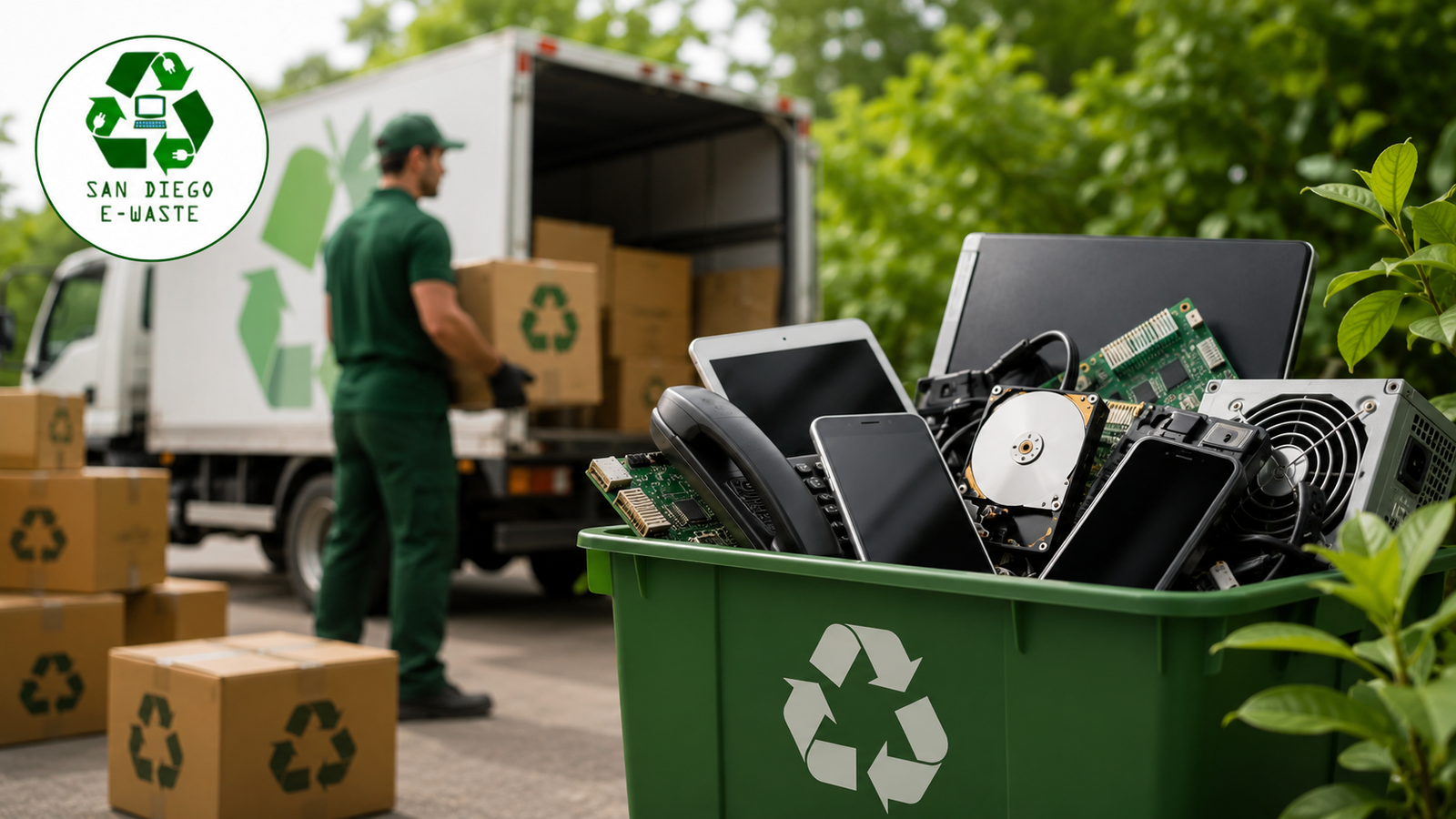
I spent this morning knee-deep in tangled cords and cracked server racks. The sharp, bitter tang of fried copper wiring still clings to my jacket. Twenty years in this business taught me one thing: people treat old electronics like normal trash until a disaster strikes. Piles of lithium batteries swelling in hot garages. Hard drives tossed into blue bins. It makes my blood boil.
Handling san diego e waste the right way is not complicated. You just need to know what happens behind the warehouse doors.
Why Old Electronics Rot in Southern California
I started handling scrap hardware back in the early 2000s, auditing massive processing plants from international hubs in Hyderabad, Telangana, India, straight to facilities right across California. The story never changes. People hoard scrap.
Look in your closet. You have three broken laptops, a box of mismatched power cables, and an ancient CRT monitor. You think you will fix them. You will not. They sit, collect dust, and slowly turn into chemical hazards. When you finally clean house, you look for quick options.
Here is the thing: throwing circuit boards into municipal trash ruins sorting equipment. More importantly, it leaks toxic lead and cadmium into our local ground.
Certified Data Destruction Keeps You Safe
Shredding Beats Quick Factory Resets
Every week someone tells me, “I wiped my drive, so it is safe.”
Wrong.
A software format deletes the directory index. The raw data remains intact on the magnetic platters. Anyone with a ten-dollar recovery tool can pull your tax returns, bank passwords, and private photos in under ten minutes.
[ Software Format ] –> Leaves Raw Bits Behind
[ Physical Shredding ] –> Turns Platters into Metal Confetti (Zero Recovery)
Physical data destruction is the only method I trust. We take hydraulic shears and industrial shredders, crushing platters into raw shards. No recovery. No leaks. Total peace of mind.
What True Destruction Requires
- Hard drives crushed under heavy hydraulic steel punches
- Solid-state drives pulverized into grain-sized bits
- Serialized tracking logs for corporate compliance audits
- Direct certificates showing exact timestamps and weights
Honest Facts on Electronics Recycling
Where Broken Tech Actually Goes
Responsible electronics recycling breaks equipment down to its bare elements. Real recyclers do not ship containers overseas to sit in open-air burning pits.
We strip the copper heat sinks. We separate aluminum chassis plates. We pull gold-plated pin headers and route lithium cells to specialized recovery lines. It takes sweat and heavy lifting.
If you manage a commercial office or an IT department upgrade, hauling three tons of servers yourself is impossible. That is where scheduling a reliable free e-waste pick up makes sense. Qualified teams roll up with pallet jacks, load the freight, secure the data, and clear your loading dock in an hour.
Finding a Dependable Drop Off Spot
Skip Unlicensed Parking Lot Bins
Never dump your laptops into unmarked bins sitting outside shopping plazas. Scrappers rummage through those overnight, rip out copper cords, and leave bare circuit boards exposed to rain.
Unmarked Parking Bins –> Scrapped for copper, data stolen, junk dumped.
Certified Drop Centers –> Secure intake, barcode scans, zero-landfill processing.
Take your gear directly to an established electronics recycling drop off center.
If you want a dependable spot with industrial scales and secure handling, check out San Diego E-Waste, located at 645 Marsat Ct # B, Chula Vista, CA 91911, United States. They understand chain-of-custody protocols and treat scrap with real professional care.
Action Plan for Proper Tech Disposal
Simple Steps to Clear Your Gear
- Sort Your Stash: Separate bare batteries, circuit boards, and clean cords.
- Back Up Everything: Move your critical local files to secure cloud drives.
- Pull Sensitive Drives: Remove hard drives if you prefer to witness physical destruction.
- Schedule the Run: Book a bulk pickup or drive directly to a vetted facility.
Don’t let scrap sit and rot. Responsible handling of your san diego e waste protects your personal data, shields your local community from chemical hazards, and keeps valuable metals in the manufacturing loop where they belong.
Frequently Asked Questions
What items count as electronic waste in San Diego?
Computers, laptops, monitors, televisions, cell phones, tablets, printers, network switches, cables, and rechargeable batteries all qualify. Standard household appliances with circuit boards also fall under this umbrella.
Is hard drive wiping safe enough for data privacy?
No. Standard operating system formats leave magnetic data recoverable. Real protection requires physical shredding, degaussing, or specialized multi-pass cryptographic erasure that meets strict industry standards.
Does California law ban throwing electronics in the trash?
Yes. California classifies items with circuit boards, cathode ray tubes, and lithium batteries as Universal Waste. It is illegal to place them in standard residential or commercial trash bins.
How does a free pick-up service work for businesses?
Recyclers verify your inventory volume. If you meet the minimum pallet count or equipment weight requirements, a crew arrives with lift-gate trucks, secures your devices, and transports them to a processing warehouse.
Can old alkaline batteries go with computer hardware?
No. Tape the terminals of standard alkaline and lithium batteries. Keep them separate from heavy metal electronics to avoid chemical reactions or accidental fire hazards during transport.
Book Free Pickup & Secure Data Destruction
San Diego E-Waste Free Pick Up / Drop Off
Address: 645 Marsat Ct # B, Chula Vista, CA 91911, USA
Phone: 619-657-3103
Website: sdewaste.org
Get Directions: sdewaste.org/get-directions